

Why Multi-Strand Copper Wire Is Preferred for Flexible Electrical Connections
Electrical connections must be safe, reliable, and durable to support the smooth functioning of appliances, machinery, and electrical systems. While different types of conductors are available, multi-strand copper wire is widely used in applications where flexibility and dependable conductivity are important. Unlike solid conductors, which consist of a single wire, multi-strand copper wire contains several thin copper strands twisted or bundled together. This construction allows the wire to bend more easily and withstand repeated movement when properly designed for the application. From household appliances to industrial equipment and automotive wiring, these wires offer practical advantages in installations where rigid conductors may be less suitable. Understanding their benefits helps electricians, contractors, and buyers choose the right electrical cable. Empire Cables recognises the importance of selecting suitable wiring solutions for reliable electrical connections.
What Is Multi-Strand Copper Wire?
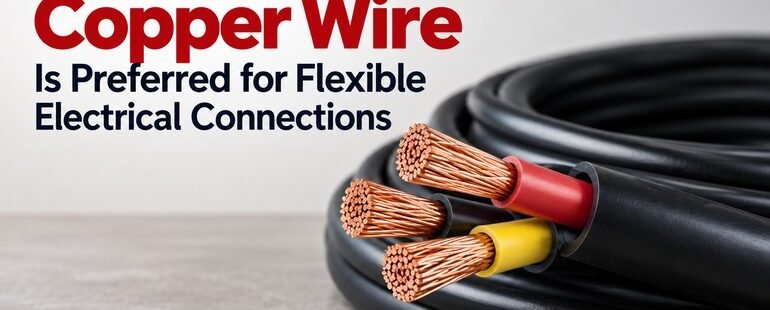
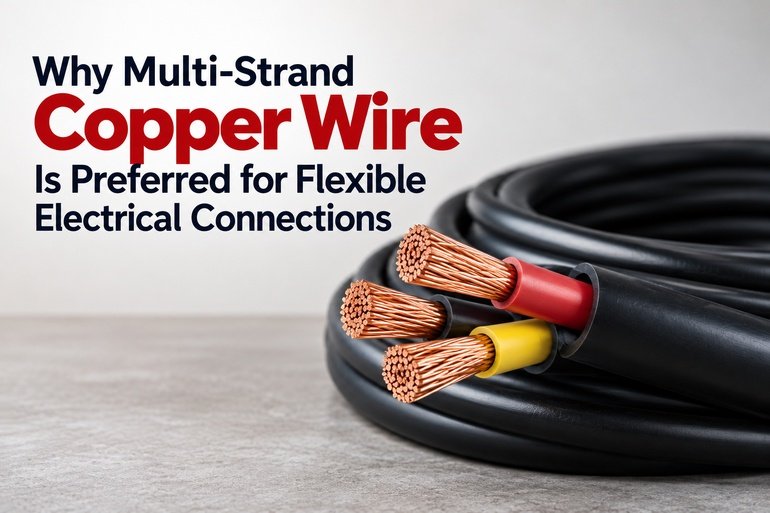
Multi-strand copper wire is an electrical conductor made by combining multiple thin copper wires into a single conductor. The number, diameter, and arrangement of strands determine its flexibility and electrical characteristics.
Copper is preferred because it offers high electrical conductivity, good ductility, and useful thermal performance. Its stranded construction makes it easier to route through bends, panels, and compact spaces.
These wires are commonly used in control panels, electrical appliances, flexible leads, machinery, and automotive electrical systems. However, the correct cable type depends on the current rating, operating environment, and installation requirements.
1. Why Multi-Strand Copper Wire Offers Better Flexibility
Flexibility is one of the main reasons for choosing stranded copper conductors. Several thin strands can move slightly relative to one another when the cable bends, making the conductor more adaptable than a comparable solid conductor.
This is particularly useful in applications involving movement or restricted installation spaces.
Key benefits include:
- Easy installation: The wire can be routed around corners and through compact enclosures.
- Better handling: Electricians can position flexible conductors more conveniently during installation.
- Movement tolerance: Suitable cable designs can accommodate repeated bending within their specified limits.
- Space efficiency: Flexible conductors can simplify connections in crowded electrical panels.
The actual bending performance depends on strand construction, insulation, cable design, and the manufacturer’s specified minimum bend radius.
2. Reliable Electrical Conductivity and Performance
Copper is an excellent conductor of electricity, helping reduce resistive losses when the conductor is correctly sized for its application. Multi-strand copper wire combines this material advantage with a construction suited to flexible connections.
Its performance depends on factors such as conductor cross-sectional area, current load, cable length, ambient temperature, and installation conditions.
Selecting an appropriately rated wire helps prevent excessive heating and supports reliable electrical operation. Buyers should always check applicable electrical standards and manufacturer specifications rather than assuming that every stranded wire can carry the same current.
3. Durability in Different Electrical Applications
A properly selected multi-strand copper conductor can perform reliably in installations where cables experience routine handling or movement. Its flexible construction can reduce the difficulty of routing cables without forcing sharp bends.
Common applications include:
- Household appliances and equipment connections.
- Industrial control panels and machinery.
- Automotive and transport electrical systems.
- Electronic equipment and flexible connecting leads.
- Commercial installations requiring suitable flexible wiring.
For applications involving continuous movement, vibration, or outdoor exposure, choose a cable specifically designed and rated for those conditions.
4. Multi-Strand Copper Wire vs Solid Copper Wire
Feature | Multi-Strand Copper Wire | Solid Copper Wire |
Construction | Multiple thin strands | One solid conductor |
Flexibility | Generally higher | Generally lower |
Installation | Useful for complex routing | Suitable for fixed routing |
Typical applications | Flexible leads and equipment connections | Fixed building wiring, where permitted |
Termination | May require suitable terminals or ferrules | Depends on the terminal design |
Neither option is universally better. Solid conductors can be suitable for fixed installations, while stranded conductors are often preferable where flexibility is required.
5. How to Choose the Right Multi-Strand Copper Wire
Before purchasing a cable, consider the electrical load and the environment in which it will operate.
Follow these practical steps:
- Check the conductor size: Select the appropriate cross-sectional area for the expected current and installation conditions.
- Choose suitable insulation: Consider temperature, moisture, chemicals, and other environmental factors.
- Review flexibility requirements: Determine whether the cable will remain stationary or experience repeated movement.
- Verify compliance: Check relevant safety standards, certifications, and manufacturer documentation.
- Use proper terminations: Select compatible connectors and follow the recommended termination procedure.
Empire Cables can be approached to understand available cable options and identify products suitable for specific electrical requirements.
Conclusion
Multi-strand copper wire is preferred for many flexible electrical connections because it combines copper’s excellent conductivity with a construction that supports easier bending and routing. It is useful in appliances, industrial equipment, control panels, and other applications where installation flexibility matters. However, safety and performance depend on selecting the correct conductor size, insulation, cable rating, and termination method. Empire Cables encourages buyers and electrical professionals to assess their application requirements carefully before choosing a wiring solution. Contact the team to explore suitable cable options for your electrical installation needs.
Frequently Asked Questions
1. What is multi-strand copper wire used for?
Multi-strand copper wire is used in appliances, control panels, machinery, automotive systems, and flexible electrical connections. Its construction makes it suitable for applications requiring easier routing or movement, provided the cable is rated for the intended conditions.
2. Why is stranded copper wire more flexible than solid wire?
Stranded copper wire contains several thin conductors that can move slightly relative to one another during bending. This construction generally improves flexibility compared with a solid conductor of similar overall size and material.
3. Is multi-strand copper wire suitable for household wiring?
It can be suitable for certain household connections and installations, depending on local electrical regulations, cable ratings, and the application. Always use approved products and consult a qualified electrician to ensure safe selection and installation.
4. Does multi-strand copper wire improve electrical conductivity?
Copper provides excellent electrical conductivity, but stranded construction alone does not guarantee lower resistance than a solid conductor of equivalent copper cross-sectional area. Proper sizing and installation are essential for efficient electrical performance.
5. How do I select the right multi-strand copper cable?
Consider current requirements, conductor size, insulation type, operating temperature, environmental exposure, and flexibility needs. Verify product specifications and applicable standards before purchasing to ensure the cable is appropriate for its intended application.