

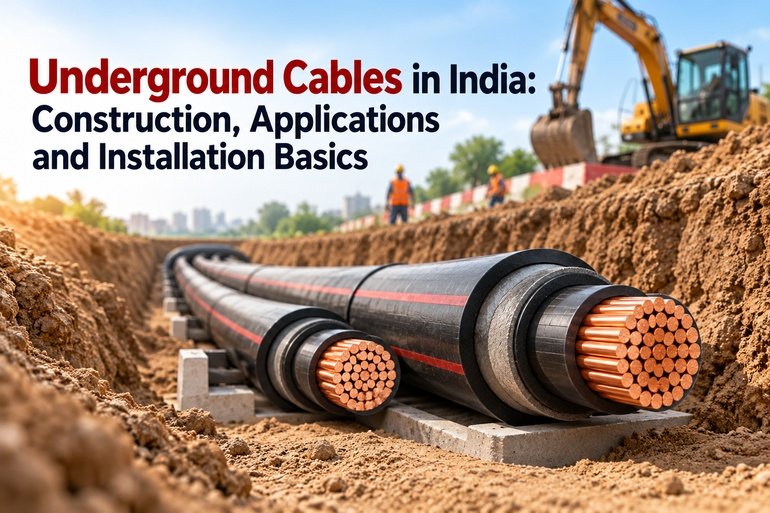
Underground Cables in India: Construction, Applications and Installation Basics
Underground cables in India play an important role in delivering electricity safely and reliably across residential areas, commercial buildings, industrial facilities, and urban infrastructure. Unlike overhead power lines, these cables are installed below ground, helping reduce visual clutter and exposure to certain environmental hazards. They are particularly useful in crowded cities, industrial zones, and locations where overhead wiring may be impractical. Understanding underground cable construction, applications, and installation methods helps engineers, contractors, and project owners select suitable electrical solutions. From conductor materials and insulation to protective armouring and outer sheaths, every component contributes to cable performance. Empire Cables recognises the importance of choosing suitable cables for dependable electrical distribution. This guide explores how underground cables are constructed, where they are used, and what to consider during installation.
What Are Underground Cables?
Underground cables are insulated electrical conductors designed to transmit and distribute electricity beneath the ground. They are manufactured to withstand electrical stress, moisture, mechanical pressure, and other conditions associated with buried installations.
Depending on the application, underground cables may carry low, medium, or high voltages. Their specifications vary according to the required current capacity, installation environment, soil conditions, and applicable electrical standards.
Construction of Underground Cables
The construction of an underground cable depends on its voltage rating and intended use. Most power cables contain several layers that work together to provide electrical insulation and physical protection.
1. Conductor
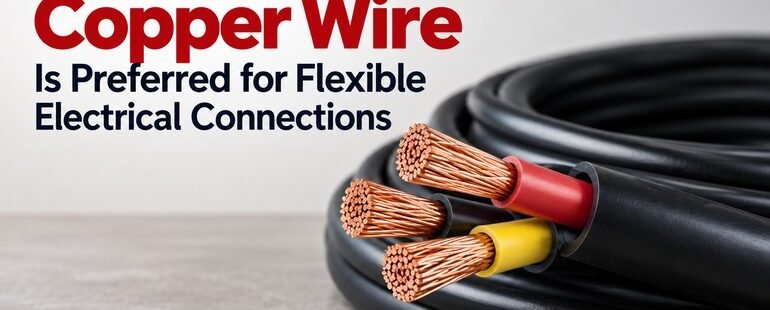
The conductor carries electrical current and is commonly made from copper or aluminium. Copper offers good electrical conductivity, while aluminium is lighter and can be suitable for applications where weight and cost are important considerations.
2. Insulation
Insulation prevents current from escaping the conductor and protects against electrical faults. Materials such as XLPE (cross-linked polyethylene) and PVC (polyvinyl chloride) are used according to the cable’s voltage rating and operating requirements.
3. Bedding and Armouring
Bedding provides a protective layer beneath the armour. Steel wire or steel tape armouring can improve mechanical protection against external forces, particularly in installations exposed to potential physical damage.
4. Outer Sheath
The outer sheath protects the cable from moisture, abrasion, and environmental exposure. Its material is selected according to the installation conditions and the level of protection required.
Major Applications of Underground Cables in India
Underground cables support electricity distribution across several sectors.
- Residential areas: Supply power to housing societies, apartment complexes, and residential developments.
- Commercial buildings: Provide electrical connections for offices, shopping centres, hospitals, and hotels.
- Industrial facilities: Support machinery, production lines, control systems, and power distribution networks.
- Urban infrastructure: Help supply electricity to roads, metro facilities, tunnels, and public utilities.
- Renewable energy projects: Connect solar and wind installations to electrical distribution systems where underground routing is suitable.
Underground installations can improve streetscape appearance and reduce exposure to weather-related damage. However, they require careful planning and may be more expensive to install and repair than overhead lines.
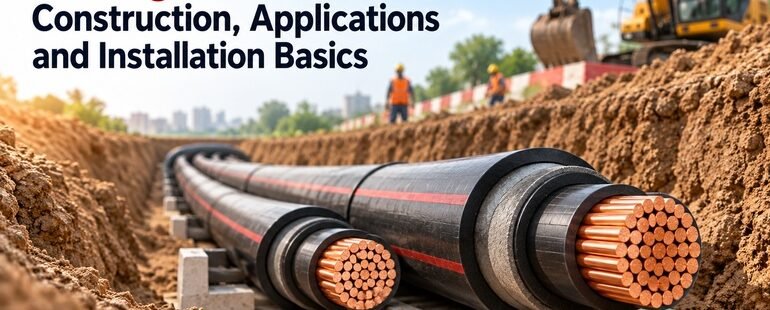
Underground Cable Installation: Essential Steps
Proper installation is important for cable safety, service life, and electrical performance. The process should follow approved engineering designs, manufacturer instructions, and applicable electrical regulations.
- Route planning: Survey the site and identify existing utilities, soil conditions, access points, and potential obstacles.
- Trench preparation: Excavate the route to the depth and width specified by the approved design.
- Cable laying: Position cables carefully, maintaining the permitted bending radius and avoiding excessive pulling tension.
- Protective measures: Provide suitable bedding, warning tapes, ducts, tiles, or other protection as required by the installation design.
- Jointing and termination: Use compatible accessories and qualified personnel to complete connections safely.
- Testing and commissioning: Perform the required insulation, continuity, and other applicable electrical tests before energising the system.
Installation requirements vary by voltage level and location. Qualified professionals should determine the appropriate burial depth, separation distances, earthing arrangements, and testing procedures.
How to Choose the Right Underground Cable
Selecting a suitable cable requires more than checking its price or conductor material. Consider the following factors before purchasing:
|
Selection Factor |
Why It Matters |
|
Voltage rating |
Must match the electrical system |
|
Current capacity |
Helps prevent excessive heating |
|
Insulation material |
Determines suitability for operating conditions |
|
Armouring |
Provides mechanical protection where required |
|
Installation environment |
Influences moisture, temperature, and chemical resistance |
|
Applicable standards |
Supports safety, quality, and regulatory compliance |
Empire Cables can be considered when evaluating cable solutions for electrical projects. Buyers should review technical specifications, applicable certifications, and project requirements before finalising their selection.
Conclusion
Underground cables in India are essential for modern electrical distribution, supporting residential, commercial, industrial, and infrastructure projects. Their performance depends on suitable construction, correct cable selection, professional installation, and appropriate testing. Understanding the roles of conductors, insulation, armouring, and protective sheaths helps project teams make informed decisions. For reliable electrical planning, consult qualified professionals and evaluate products against the specific requirements of your installation. Explore Empire Cables’ available cable solutions and seek technical guidance to identify options suitable for your project.
Frequently Asked Questions
1. What are underground cables used for?
Underground cables transmit and distribute electricity beneath the ground. They are commonly used in residential developments, commercial buildings, industrial facilities, urban infrastructure, and selected renewable energy projects.
2. Which materials are used in underground cables?
Copper and aluminium are common conductor materials. XLPE and PVC are widely used insulation materials, while protective armouring and outer sheaths help improve mechanical and environmental protection.
3. Are underground cables better than overhead cables?
Underground cables offer a cleaner appearance and reduced exposure to certain weather hazards. However, installation costs are generally higher, and locating and repairing faults can be more difficult than with overhead lines.
4. What precautions are necessary during underground cable installation?
Installation requires proper route planning, utility identification, suitable trench preparation, controlled cable handling, approved protective measures, and appropriate electrical testing. Qualified personnel should follow applicable standards and project specifications.
5. How can I select underground cables for an industrial project?
Consider voltage rating, load current, conductor material, insulation, armouring, environmental conditions, and applicable standards. Consult a qualified electrical engineer and review the manufacturer’s technical documentation before selecting a cable.