
Types of Electrical Wires and Cables Used in Indian Homes and Industries
Electrical wiring is an important but silent component in the way homes, offices and industries operate day in day out. The selection of appropriate wire or cable type is not merely related to the carrying of electricity but also in terms of safety, durability and efficiency. Indian standards of wiring vary according to climate, load demand and the regulatory standards and it is crucial to know the type commonly used in various applications.
Ordinary Electrical Wires used in Indian houses
Indian residential premises use copper based wiring as copper is a good conductor and has a long life. Single-core wires can be used to provide internal fixed wiring particularly within conduits. PVC is used to insulate these wires against heat, moisture and accidental contacts.
Multi strand copper wire is another material that is more flexible than solid-core wires and is more commonly used. It is also flexible and thus suitable in areas that demand bending like switchboards, ceiling connections and appliances. Heavy electrical loads in a given home such as air conditioners or geysers require a heavier gauge of wires to safely conduct current without overheating.
Industrial Electric Cables
The industrial settings require cables with the ability to handle increased voltages, mechanical forces, and constant working conditions. The electricity at substations is normally carried by means of power cables to the machinery or panels. These cables are usually coiled using several layers of insulation and protective coating by a good power cable manufacturer in India so that they can withstand heat, oil and abrasion.
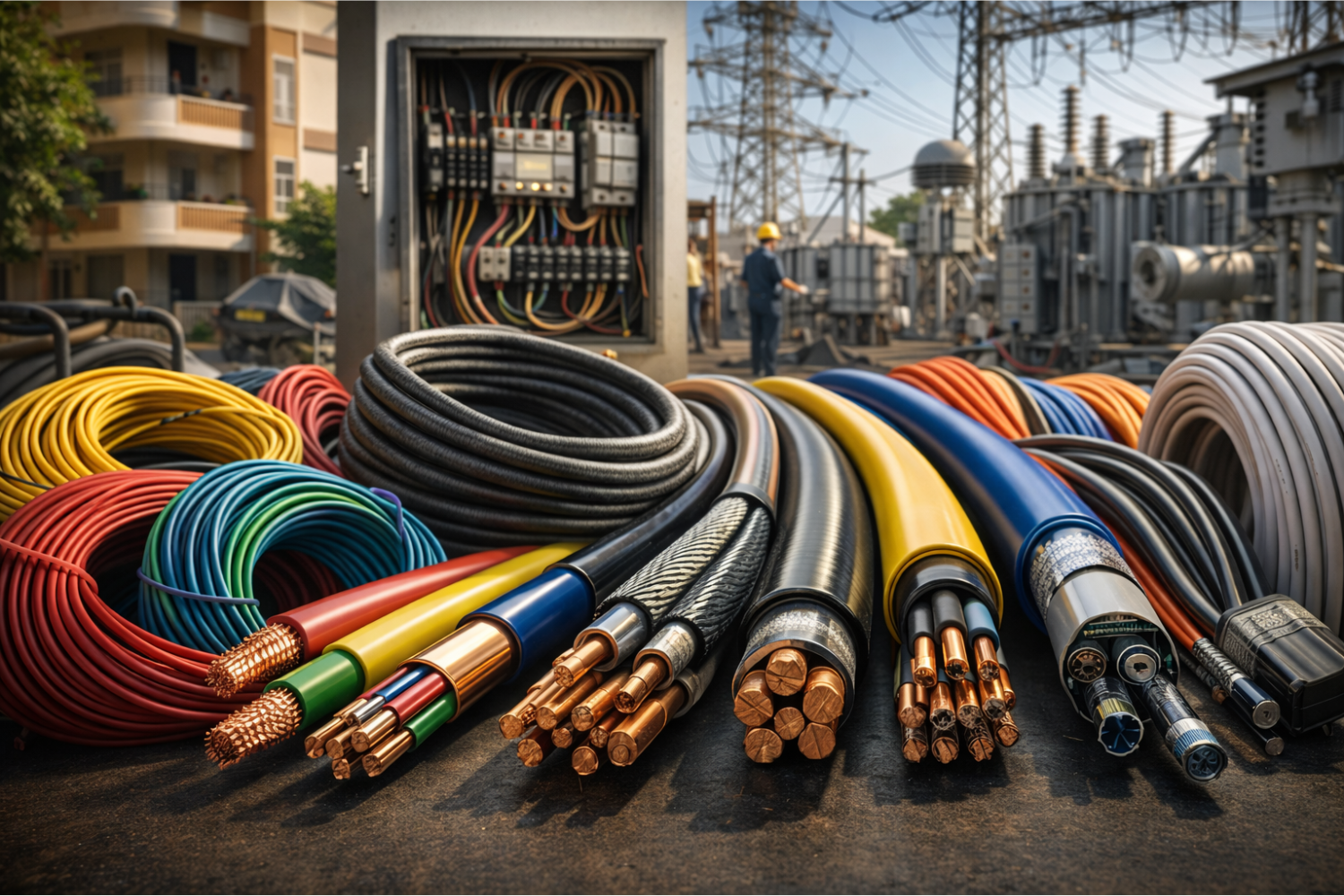
Another category that is significant in the industries is armoured cables. They consist of metal that surrounds these cables and prevents them against physical damage and hence can be used in factories, plants and outdoor utility. Cables in the ground are applied to decrease the exposure and enhance safety in most industrial setups particularly in large campuses or infrastructural projects.
Special-Purpose Cables and their Uses
In addition to the normal power wiring, there are some special-purpose cables in home and industries. Cables used in communication systems like CCTV systems are in such a way that they are meant to transport signals with a minimum interference. Portable tools, extension cords, and equipment that has to move frequently are fitted with flexible cables.
One of the reasons why underground cables are designed this way is that the insulation is moisture-resistant, and the outer covering is very tough. These cables are underground so as to avoid interruption of power supply and are commonly applied in urban developments, highways and industrial areas. A high number of wire and cable producers in India adhere to the testing requirements to make sure these cables will perform successfully in difficult conditions.
Safety Standards and Quality
The Indian electrical wiring is based on the standards of the Bureau of Indian Standards (BIS). Quality wires eliminate the risks of short circuiting, electric shocks, and fire. In choosing wiring, consideration should always be made to such things as current rating, insulation quality, and place of installation.
Conclusion
The knowledge of the types of electrical wires and cables is useful in making informed choices that consider both safety and performance and longevity.Empires Cable provides complete wiring solutions, starting with the domestic wiring that can be very flexible and that of the industrial cables that are very heavy, each has a purpose.