


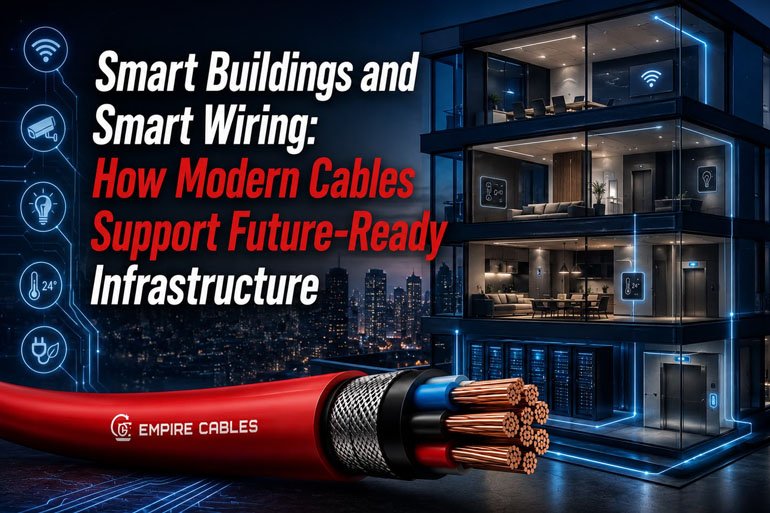
Smart Buildings and Smart Wiring: How Modern Cables Support Future-Ready Infrastructure
Changes in people’s lifestyles and work are happening due to Smart buildings. They are connected, automated, and intelligent devices that enhance safety, comfort, and energy efficiency. Every smart building has a reliable electrical network, which depends on modern cables, smart wiring, building cables, power cables, and data cables. A properly selected wiring system is crucial for providing infrastructure for today’s technology and for future technology upgrades.
Why is Smart Wiring Important?
A smart wiring system can transfer both electricity and information with high efficiency. It enables a connected environment, which includes smart lighting, security cameras, access control, HVAC control, and energy management devices, among other applications, to be integrated with the wiring. A high-quality smart wiring installation also minimises signal loss and ensures connected systems operate seamlessly.
For modern buildings, a combination of electrical and communication cables is essential as all the devices connected to it require a stable network. The right wiring plan will also ensure that the system is expandable in the future without having to replace the entire wiring network.
Role of Modern Cables
Modern building cables are designed to deliver high performance, safety, and durability. They can be used to manage the rising demand for power and data transfer speeds. Most modern power cables have improved insulation, heat resistance, and protection against moisture and fire.
In today’s buildings, where increasing numbers of smart devices are becoming part of daily life, data cables are becoming more and more significant. They serve as the link among sensors, automation, surveillance systems, and Internet-connected devices that can communicate with each other in real time. Power cables and data cables form the spine of all smart buildings.
Future-ready Cable Infrastructure
Modern, good-quality cables are beneficial in the long term. They enhance electrical safety, minimise maintenance needs, and aid in energy-efficient systems. Smart cable infrastructure also enables building owners to deploy new technology without significant changes to the electrical system.
Future-ready smart wiring enables electric vehicle charging stations, integration with renewable sources, sophisticated security systems and intelligent building management. The flexibility allows buildings to continue serving their purpose as technology evolves.
Selecting the Right Cable System
The right type of building cables will be determined by the use of the building, electrical load, environment and future technology needs. The reliability and service life of the electric cable is enhanced when installed with certified electric cables that are safe and meet industry standards.
Quality of the cable is only half the picture – the rest is how it is installed. Some planning in cable routing ensures better performance, easier maintenance, and fewer chances of electrical problems down the road.
Conclusion
Reliable and robust cable systems are a cornerstone of today’s infrastructure, ensuring power and communication services are delivered safely. Understanding the significance of modern cables, smart wiring, and quality installation can help lay the foundation for future technologies and shifting energy use in buildings.
A cable supplier looking for reliable cable solutions will emphasise manufacturing cable products for safe, efficient, and future-proof electrical infrastructure across various applications, such as Empire Cable.
FAQs
1. What is smart wiring in a building?
Smart wiring is an advanced electrical system that carries both power and data. It connects smart devices, automation systems, lighting, security equipment, and communication networks while supporting efficient and reliable building operations.
2. Why are modern cables important for smart buildings?
Modern cables provide safe power distribution, fast data transmission, better insulation, and long-lasting performance. They help smart buildings operate efficiently while supporting future technologies and reducing maintenance needs over time.
3. What types of cables are commonly used in smart buildings?
Smart buildings typically use power, electrical, data, communication, fibre-optic, and control cables to support automation systems, internet connectivity, lighting, security, and energy management.
4. How do quality cables improve building safety?
Quality cables are designed with robust insulation and fire-resistant materials that reduce the risk of electrical faults, overheating, and short circuits. They improve system reliability and help maintain safe electrical performance throughout the building.
5. Can smart wiring support future technology upgrades?
Yes. Smart wiring is designed for scalability, making it easier to install new smart devices, renewable energy systems, electric vehicle chargers, and advanced automation technologies without replacing the complete wiring infrastructure.