
What to Check Before Buying LEDs for Residential Use
The use of LED lights has been an order of the day in homes due to the low amounts of electricity incurred and their longevity compared to the normal bulbs. Nonetheless, LED lights are not all alike. The main point is that prior to purchasing LEDs to use at home it is necessary to consider several essential points so that to get the lighting that is comfortable, safe and fits the ordinary living.
Learn to Love Light, Not Watts
Much of the population continues to consider the amount of wattage when purchasing lights, unlike LEDs. The brightness is quantified in lumens as opposed to watts. The more lumens the brighter the light. An example is that a 9-watt LED bulb will produce the same brightness as a 60-watt old incandescent bulb. Measurement of lumens will help you select correctly the kind of LED lights to use at home without getting lights that are too bright or too bright.
Select the Appropriate Temperature of Colour
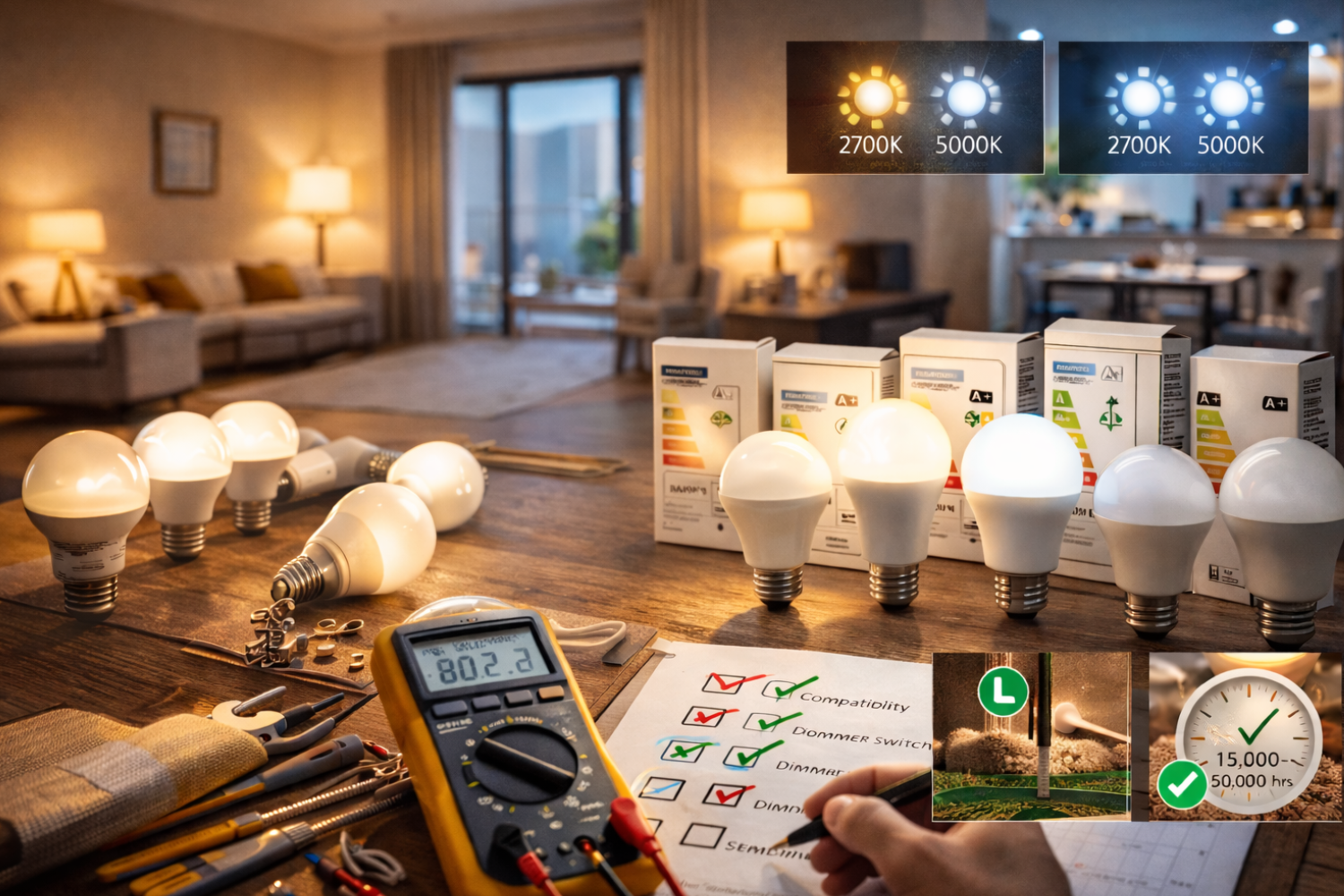
The perception of the room is influenced by color temperature. It is measured in Kelvin (K). LEDs that are warm (2700K-3000K) are the best in bedrooms and the living room since they produce a soothing and comfortable effect. White LEDs (4000K-5000K) are preferable to cool environments like in the kitchen, bathroom and study where clarity is crucial. The proper color temperature of the LED enhances the comfort and lowers the eye strain.
Confirm Energy Saving and Rating
Energy saving is one of the greatest merits of LED bulbs. Energy efficient rating or certification marks will always be found on packaging. Quality LEDs use less energy and transform more energy into light and less heat. The LED bulbs are also energy-efficient and reduce electricity payment in the long run and its long-term residence usage is better.
See Lifespan and Heat Management
The life of LED is typically 15,000 to 50,000 hours, although it varies depending on quality. There is a lack of heat dissipation which may lead to a shortened life time. The best LED bulb must not heat too much even after several hours of operation. Proper heat management assures safety and stable performance particularly where the enclosed fixtures are installed in houses.
Integrity with Existing Fixtures
Prior to purchasing, ensure that the LED bulb can fit with the current fittings and switches. Not all of the LEDs are compatible with older dimmers and may flicker or buzz. Verification of compatibility prevents inconvenience and provides the continued running of equipment in everyday use.
Conclusion
Purchasing LEDs to light homes is not a matter of financial gains, it is also a matter of convenience, comfort, and durability. Knowledge on brightness, color temperature, energy efficiency, lifespan, and compatibility of the fixtures allow the homeowners to make wise choices. Firms such as Empire Cables which have been associated with electrical and cable-related solutions realize how good lighting selection relates to secure and most effective home electrical installations, and hence, knowledge is the first step towards every home.