
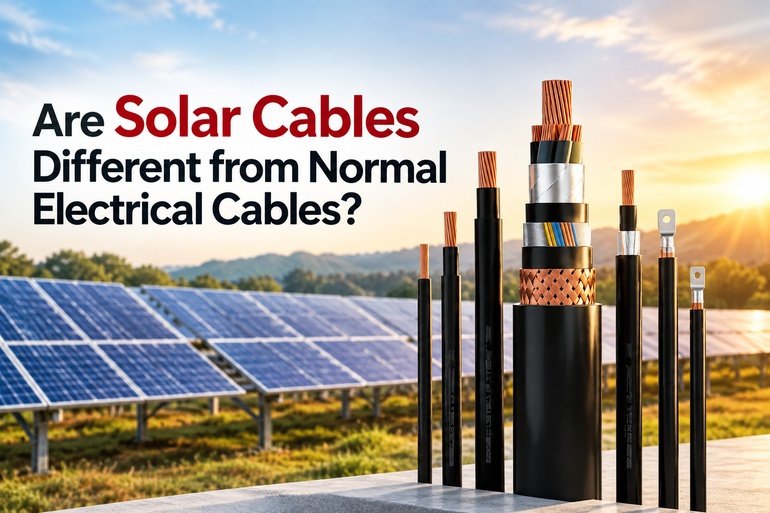
Are Solar Cables Different from Normal Electrical Cables?
Solar power systems work in a demanding environment. The cables connecting solar panels, junction boxes, inverters and other components are exposed to sunlight, heat, moisture and temperature changes for years. This raises an important question: Are solar cables different from normal electrical cables? Yes, they are. Although both carry electrical current, solar cables are specially designed for photovoltaic (PV) applications and outdoor conditions. They are built to handle DC power, UV exposure, temperature variations and mechanical stress more effectively than many conventional electrical cables. Choosing the right cable is therefore an important part of building a safe and reliable solar installation.
What Are Solar Cables?
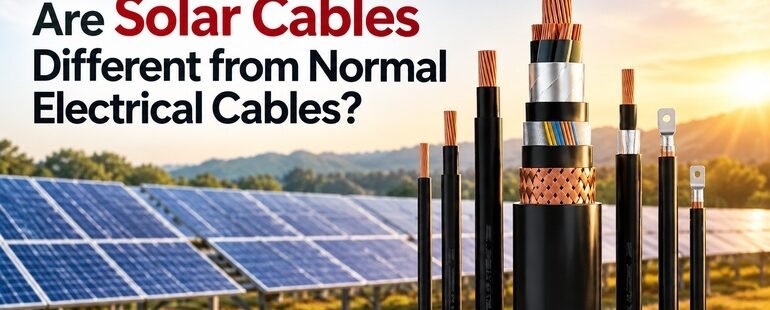
Solar cables, also called photovoltaic cables, are designed specifically for connecting components of a solar power system. They are commonly used on the DC side between solar panels and other PV equipment.
Unlike ordinary electrical wiring, solar cables are designed for long-term outdoor exposure. Standards such as IEC 62930 cover cables used on the DC side of photovoltaic systems, including cables rated up to 1.5 kV DC.
These cables generally use specially formulated insulation and sheathing to provide resistance against UV radiation, moisture, ozone and temperature changes.
How Are Solar Cables Different from Normal Electrical Cables?
The difference is not simply the colour or appearance of the cable. Their construction and intended application can be quite different.
|
Feature |
Solar Cable |
Normal Electrical Cable |
|
Main application |
Solar PV systems |
General electrical installations |
|
Current application |
Primarily DC side of PV systems |
Commonly AC applications |
|
UV resistance |
Designed for prolonged outdoor exposure |
Depends on cable type |
|
Weather resistance |
High for suitable PV-rated cables |
Varies by construction |
|
Temperature handling |
Designed for demanding PV environments |
Depends on cable specification |
|
Flexibility |
Usually highly flexible |
Varies by type |
|
Standards |
IEC 62930, EN 50618 and relevant national standards |
Depends on application |
The exact specifications always depend on the cable design and applicable standard, so installers should check the manufacturer’s technical data before making a selection.
1. Better UV and Weather Resistance
Solar panels are normally installed outdoors, where cables remain exposed to direct sunlight. Continuous UV exposure can damage unsuitable insulation over time.
Solar cables are manufactured with materials intended to resist UV radiation, weathering and moisture. This makes them better suited for rooftop and ground-mounted solar installations.
For example, a cable running underneath a rooftop solar panel may experience intense sunlight and high temperatures throughout the day. A suitable solar cable is designed with these conditions in mind.
2. Designed for DC Solar Power
Another important difference is their application. Solar cables are commonly used for transmitting DC electricity generated by photovoltaic modules.
The cable must have an appropriate voltage rating and current-carrying capacity for the particular solar system. Proper sizing also helps control voltage drop and energy losses. Indian rooftop solar guidance recommends sizing DC cables according to current requirements and voltage-drop considerations.
Using a cable simply because it appears physically suitable can therefore be a poor approach.
3. Stronger Protection Against Temperature Changes
Solar cables can experience significant temperature variations during their service life. Depending on the cable specification, PV cables can be designed for operating temperatures around -40°C to +90°C, with certain conditions allowing higher short-duration temperatures.
This is particularly useful for solar installations exposed to India’s hot summers and changing outdoor conditions.
4. Specialised Insulation and Construction
Many solar cables use cross-linked insulation and sheathing materials, while some designs use tinned copper conductors. These construction features can improve durability, flexibility and resistance to environmental conditions.
For this reason, a solar cable may cost more than a basic electrical cable, but the comparison should consider the application and expected service life rather than only the initial purchase price.
Can Normal Electrical Cables Be Used for Solar Panels?
Not every normal electrical cable is suitable for solar applications. The correct choice depends on where the cable is being installed, its voltage and current requirements, environmental exposure and applicable standards.
For instance, a standard indoor cable may be perfectly suitable for household wiring but inappropriate for continuous exposure on a solar rooftop.
It is therefore important to select cables specifically rated for the intended part of the PV system and follow the project’s electrical design and installation requirements.
How to Choose the Right Solar Cable
Before purchasing a solar cable, consider:
- Required voltage and current rating
- Conductor material and cross-sectional area
- UV and weather resistance
- Temperature rating
- Flexibility and installation conditions
- Applicable BIS, IEC or other project standards
- Compatibility with connectors and other PV components
- Manufacturer’s technical specifications
Proper cable selection can help improve the safety, reliability and long-term performance of a solar power system.
Conclusion
So, are solar cables different from normal electrical cables? Absolutely. Solar cables are specifically designed for the conditions found in photovoltaic systems, including DC power transmission, prolonged outdoor exposure, UV radiation, moisture and temperature fluctuations. Choosing the appropriate cable can make a significant difference to the reliability and safety of a solar installation. For quality cable solutions and application-focused guidance, connect with Empire Cables and choose the right cable for your solar project.
Frequently Asked Questions
Solar PV systems require cables with specifications suitable for their electrical and environmental conditions. Dedicated PV cables are commonly used on the DC side because they are designed for solar applications.
2. What makes a solar cable different?
Solar cables are designed for PV applications and can offer features such as UV resistance, weather resistance, flexibility and suitable DC voltage ratings.
3. Can I use a normal electrical wire for solar panels?
It depends on the cable’s specifications and application. A general-purpose cable should not be used simply because it can carry electricity. Always verify its ratings and suitability for the PV system.
4. Are solar cables suitable for outdoor use?
Suitable solar cables are specifically designed for outdoor PV applications and can provide resistance against factors such as UV radiation, moisture and temperature variations.
5. How do I select the right solar cable?
Consider the system voltage, current, cable size, installation environment, temperature, required standards and manufacturer’s specifications before choosing a solar cable.