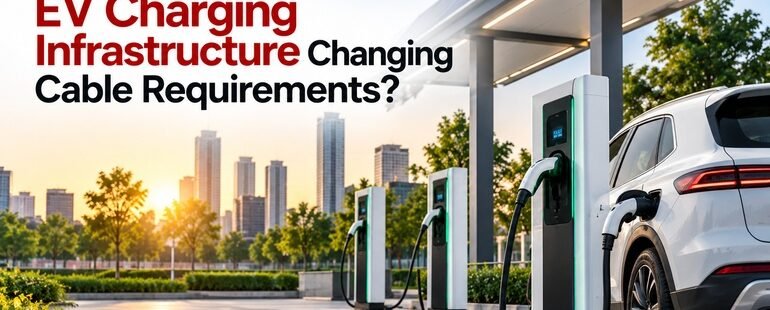

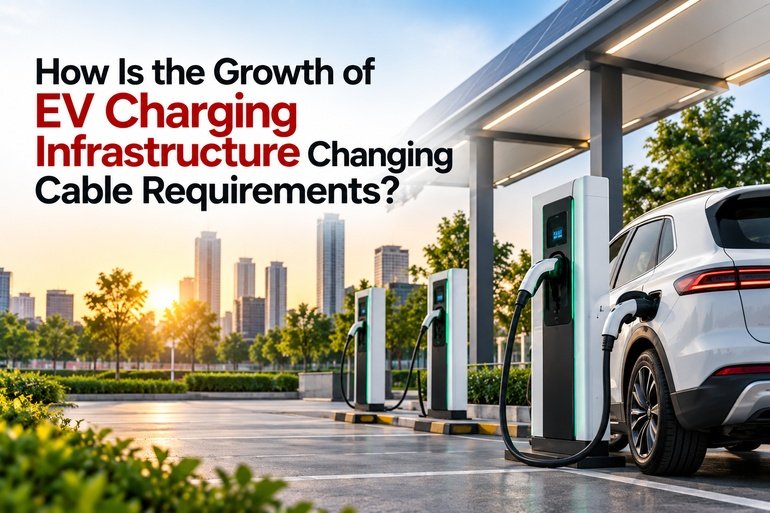
How Is the Growth of EV Charging Infrastructure Changing Cable Requirements?
The rapid expansion of electric vehicle (EV) charging infrastructure is changing the way electrical cables are designed, selected, and installed. As more homes, offices, highways, parking facilities, and commercial locations adopt EV chargers, the demand is shifting from conventional power cables to solutions capable of handling higher loads, heat, mechanical stress, and continuous operation. In India, charging infrastructure includes AC and DC systems with different voltage and power requirements. For cable manufacturers and suppliers such as Empire Cables, this growth creates a need for cables that combine electrical performance, flexibility, durability, and safety.
How Is EV Charging Infrastructure Increasing Cable Requirements?
The growth of EV charging infrastructure is directly connected to rising electricity demand at charging points. Basic AC chargers may operate at relatively moderate power levels, while fast and high-power DC chargers require cables designed for substantially greater electrical loads.
For example, BEE specifications include Type-2 AC charging at a minimum of 22 kW and fast charging systems such as CCS and CHAdeMO at a minimum of 50 kW.
This means cable requirements are changing in several important ways:
- Higher current-carrying capacity
- Better thermal performance
- Greater flexibility
- Stronger insulation and sheathing
- Improved resistance to mechanical stress
- Compatibility with modern charging equipment
- Better performance under frequent charging cycles
Why Do EV Chargers Need Specialised Cables?
Traditional electrical cables are designed for a wide range of applications, but EV charging can place different demands on a cable. Charging cables may experience repeated bending, outdoor exposure, mechanical movement, and prolonged current flow.
The proposed Indian Standard for EV charging cables specifically addresses cables for EV charging systems, including AC charging and DC charging applications. It covers cables rated up to 1,100 V AC or 1,500 V DC for relevant flexible applications.
Therefore, cable selection cannot be based simply on conductor size. The application, charging capacity, installation conditions, temperature, and required flexibility must also be considered.
Higher Charging Power Means Higher Cable Capacity
One of the biggest changes is the move toward faster charging.
When charging power increases, the electrical system can experience higher current and greater heat generation. Cables therefore need suitable conductor sizes, insulation, and thermal characteristics to operate reliably.
High-power charging is particularly important for electric buses, commercial fleets, and long-distance vehicles. India’s EV charging guidelines also identify high-power chargers of at least 240 kW for certain public charging stations serving long-range and heavy-duty EVs.
This trend is encouraging greater demand for high-current cables for EV charging infrastructure.
Flexibility Is Becoming More Important
EV charging cables are not always permanently fixed like cables used inside conventional electrical installations. Vehicle-side cables can be moved, bent, coiled, and handled repeatedly.
This creates additional mechanical requirements.
A suitable charging cable should be capable of handling repeated movement without quickly developing cracks, conductor damage, or insulation failure. Flexibility becomes especially important at busy public charging stations where cables may be used many times every day.
Cables for Indoor and Outdoor Charging
Charging infrastructure is being installed in:
- Residential parking areas
- Shopping centres
- Office buildings
- Highway charging stations
- Fleet depots
- Hotels and commercial complexes
Outdoor installations can expose cables to sunlight, moisture, dust, temperature changes, and physical impact. Cable selection must therefore consider the actual installation environment rather than relying only on electrical ratings.
Thermal Management Is Changing Cable Design
Heat is an important consideration as charging power increases. Higher current can produce more heat in the cable, particularly when charging continues for an extended period.
Modern EV charging standards recognise applications involving thermal management. The BIS material on EV charging cables distinguishes DC charging cables with and without thermal management systems.
For very high-power applications, liquid-cooled charging cables are also becoming relevant. India’s 2024 charging guidelines identify liquid-cooled cables as an optional solution for high-speed charging of compatible vehicles.
How Cable Requirements May Differ by Charging Application
Charging application | Cable considerations |
Home AC charging | Suitable current rating, insulation and installation safety |
Commercial AC charging | Higher load capacity and durability |
DC fast charging | High current, thermal performance and robust construction |
Fleet charging | Frequent use and mechanical durability |
High-power charging | Advanced thermal management and specialised cable design |
The exact cable specification should always be determined according to the charger’s electrical characteristics and applicable standards.
Standards Are Becoming More Important
As EV charging infrastructure develops, standardisation is becoming an important part of cable selection. BIS has developed standards covering EV conductive charging systems, including DC EV supply equipment. In 2026, BIS also published the first revision of IS 17017 (Part 23):2026, addressing DC EV supply equipment and adding requirements related to areas such as cable assemblies, temperature-controlled energy transfer, protection, and safety.
For cable manufacturers and buyers, this means compliance, testing, construction quality, and application-specific specifications are becoming increasingly important.
Conclusion
The growth of EV charging infrastructure is creating a clear shift in cable requirements. Higher charging power, frequent use, outdoor installations, thermal management, and evolving safety standards are pushing the industry toward more specialised cable solutions. From residential chargers to high-power commercial stations, selecting the right cable is essential for dependable and safe operation. Empire Cables can help businesses and infrastructure developers explore suitable cable solutions for their evolving EV charging requirements.
FAQs
1. Why do EV charging stations need specialised cables?
EV charging can involve continuous electrical loads, repeated cable movement, and demanding outdoor conditions. Specialised cables are designed to handle these requirements safely and reliably.
2. Does faster EV charging require different cables?
Generally, higher-power charging requires cables with suitable current capacity, thermal performance, insulation, and construction for the specific charging system.
3. Are EV charging cables suitable for outdoor use?
Some are designed for outdoor applications, but their suitability depends on their construction, environmental resistance, ratings, and installation conditions.
4. Why is flexibility important in EV charging cables?
Vehicle-side cables are frequently moved, bent, and handled. Adequate flexibility helps them withstand repeated use.
5. What is liquid-cooled EV charging cable technology?
Liquid-cooled cables use thermal management to help control heat during high-power charging, allowing specialised charging systems to handle demanding loads.