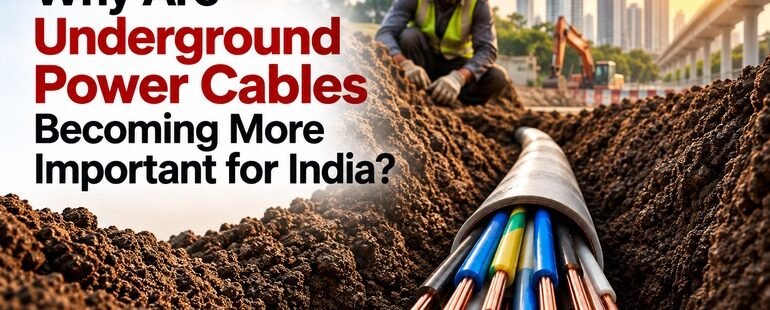


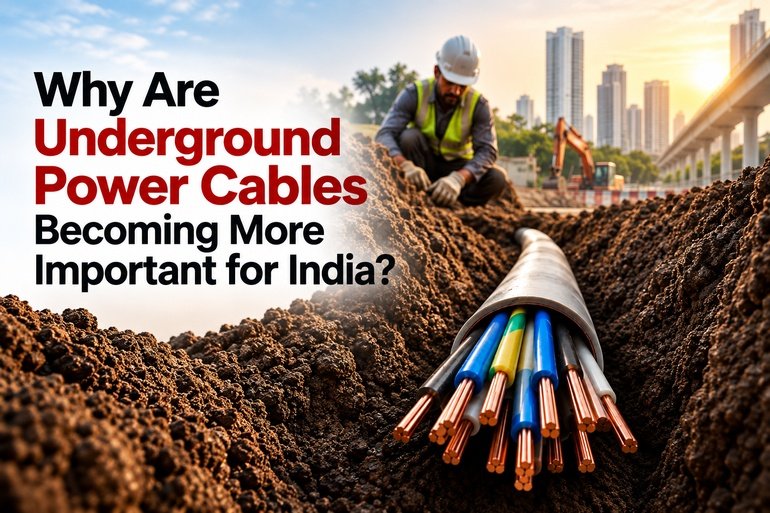
Why Are Underground Power Cables Becoming More Important for India?
India’s growing cities need a power network that is reliable, safe, and able to support rapid development. This is one reason underground power cables are becoming increasingly important for India’s modern electricity infrastructure. Unlike overhead lines, these cables are installed below the ground, which protects them from many external factors and keeps streets free from a large network of wires and poles. From urban redevelopment and smart cities to industrial zones and residential projects, underground cabling can offer practical advantages where space, safety, and reliability matter. As electricity demand continues to rise, India needs distribution systems that can handle changing urban requirements. This makes underground power cables an important option for future-ready electrical infrastructure. Empire Cables supports the need for dependable cable solutions for modern power distribution projects.
Why Are Underground Power Cables Important for India?
The importance of underground power cables is closely linked to India’s urban growth. Cities are becoming more crowded, while roads, buildings, metro systems, and other infrastructure projects require careful use of available space.
Underground cables can help create a cleaner and more organised electrical network by moving power lines below roads, pavements, and designated utility corridors.
Better Protection From Weather
Overhead power lines are exposed to rain, strong winds, storms, and other environmental conditions. Underground cables are protected by the surrounding soil and installation system.
This can reduce exposure to external damage and help maintain power supply in areas where severe weather may affect overhead infrastructure.
Improved Safety in Busy Areas
In densely populated locations, overhead electrical networks can create safety concerns if wires become damaged or come into contact with structures.
Installing power cables underground separates electrical infrastructure from everyday activities at ground level. Properly designed and installed systems can therefore improve safety around roads, residential areas, and commercial spaces.
Underground Power Cables and Urban Development
India’s cities are expanding rapidly. New residential complexes, commercial buildings, airports, metro projects, and industrial corridors require dependable electricity distribution.
Underground cabling is particularly useful in areas where overhead lines may interfere with:
- Road widening projects
- Metro and railway infrastructure
- Commercial developments
- High-density residential areas
- Airports and important public spaces
- Smart city projects
By placing cables below ground, planners can make better use of limited surface space while keeping important electrical infrastructure organised.
Key Benefits of Underground Power Cables
Benefit | How It Helps |
Weather protection | Reduces direct exposure to wind, rain and storms |
Better appearance | Removes overhead wires and poles from streets |
Greater safety | Keeps electrical conductors away from public activity |
Space efficiency | Supports infrastructure development in crowded areas |
Reduced visual clutter | Creates cleaner urban surroundings |
Reliable distribution | Provides a protected route for power transmission |
These benefits make underground systems attractive for locations where reliability and urban planning are major priorities.
Why India Needs More Reliable Power Infrastructure
India’s electricity requirements are changing with economic growth, industrialisation, digital services, and increasing household consumption. Data centres, manufacturing facilities, commercial buildings, electric transportation, and modern homes all depend on a stable power supply.
This places greater importance on the quality of electrical distribution infrastructure. Underground power cables can form an important part of this infrastructure, particularly in projects where protecting cables from external conditions is a priority.
However, underground installation also requires careful planning. Factors such as cable selection, voltage requirements, soil conditions, installation depth, jointing, insulation, and maintenance access need to be considered before implementation.
Underground vs Overhead Power Cables
Both systems have their own applications. Overhead lines are generally easier to inspect and repair, while underground cables provide better protection and a cleaner appearance.
For new infrastructure projects, the decision depends on factors such as project budget, location, electrical requirements, soil conditions, accessibility, and long-term maintenance needs.
Therefore, underground cabling should not simply be viewed as a replacement for overhead networks. Instead, it is a valuable solution for specific applications where its advantages justify the higher installation complexity.
What Should Businesses Consider When Choosing Underground Cables?
Choosing the right cable is essential for a reliable electrical system. Businesses and project developers should consider:
- Voltage rating: The cable should match the electrical requirements of the project.
- Conductor material: Copper and aluminium conductors have different properties and applications.
- Insulation: Appropriate insulation helps protect the conductor and maintain performance.
- Installation environment: Soil, moisture, temperature, and installation conditions should be evaluated.
- Cable construction: The cable should be suitable for its intended underground application.
- Quality standards: Products should meet applicable industry and safety requirements.
Working with an experienced cable manufacturer or supplier can make the selection process easier and help avoid costly installation problems.
Conclusion
Underground power cables are becoming more important for India because the country needs electrical infrastructure that can support expanding cities, growing electricity demand, and modern development. They offer protection from external conditions, improve the appearance of urban areas, and can provide safer and more organised power distribution. Although underground systems require higher planning and installation effort, their long-term advantages can make them a practical choice for many infrastructure projects. With appropriate cable selection and professional installation, underground networks can contribute to a more reliable and future-ready power system. Empire Cables can be considered when dependable cable solutions are required for modern electrical infrastructure projects.
FAQs
1. What are underground power cables?
Underground power cables are electrical cables installed below ground to transmit and distribute electricity. They are commonly used in urban, industrial, residential, and infrastructure projects.
2. Why are underground power cables important in India?
They can help address challenges associated with crowded cities, weather exposure, limited space, and visual clutter while supporting reliable electricity distribution.
3. Are underground cables safer than overhead cables?
Underground cables can reduce public exposure to electrical conductors and overhead infrastructure. However, proper design, installation, protection, and maintenance remain essential.
4. Where are underground power cables commonly used?
They are often considered for cities, residential developments, industrial areas, airports, metro projects, commercial zones, and other infrastructure developments.
5. Are underground power cables affected by weather?
They are less directly exposed to wind, rain, and storms than overhead cables because they are installed below ground.