

How to Choose the Right Cable for Your Home: A Complete Buyer’s Guide
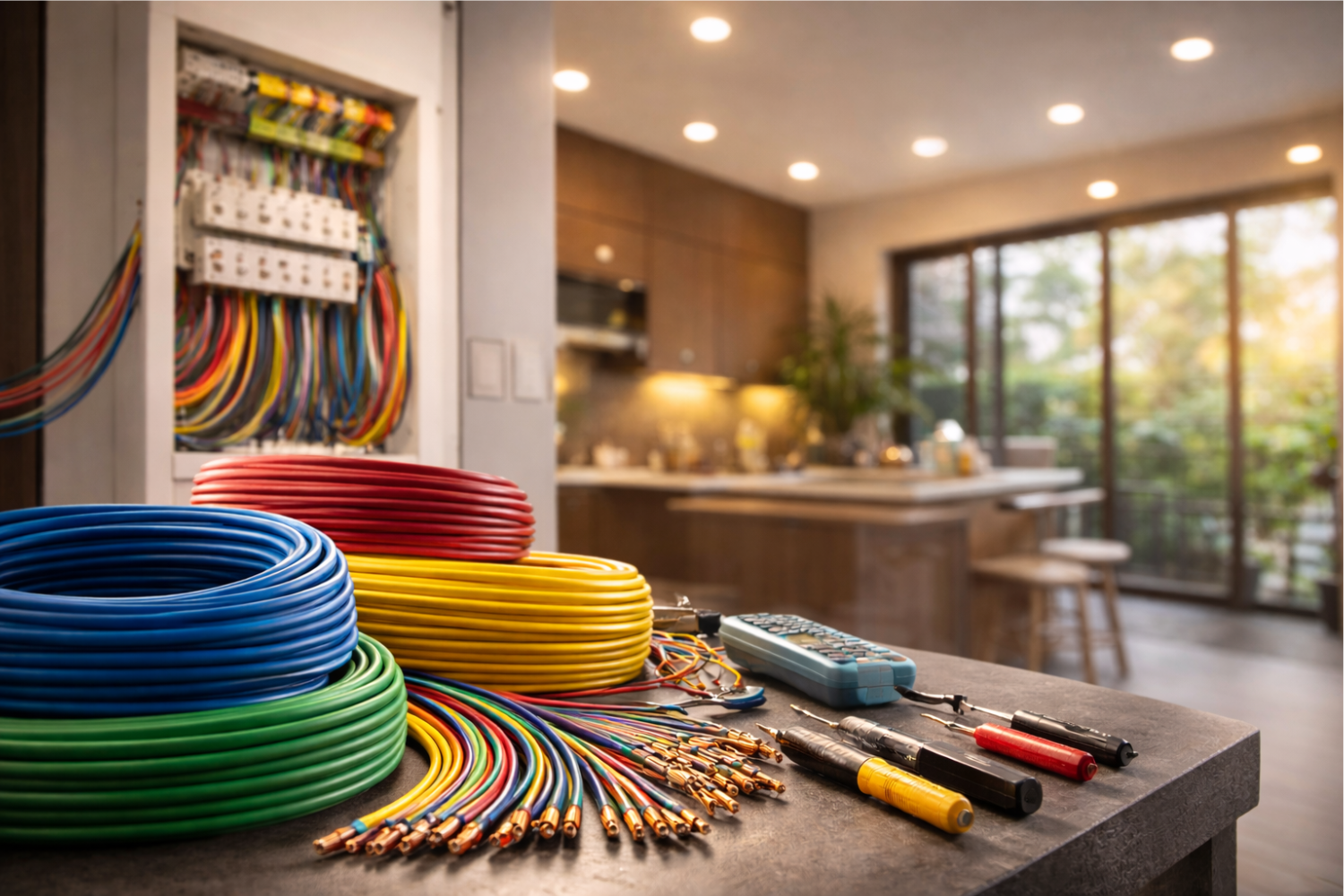
A modern house is virtually electric everywhere- lights, power appliances, entertainment, and computers. Although most of the homeowners are concerned with gadgets and decor, the electrical cables within the walls are very important to the safety and efficiency. When deciding the appropriate cables, proper distribution of power supply and control of the possibility of any electrical risk can be guaranteed, and also enhance the life span of your wiring system of the home. This reference outlines the main considerations to make when choosing the appropriate cable to use in the house.
Knowledge of the various Electrical Cables
One should also find out the type of cables that are in use in residential buildings before they purchase them. All types have their purpose under the load and use.
- The insulated PVC cables are commonly applicable in houses as they are resistant to moisture and chemicals.
- Appliances and gadgets which need to be moved around or have to be carried is also made up of flexible wires.
- Armoured cables are made to be of additional protection and are mainly employed in outdoor or underground set ups.
The choice of electrical wiring to use in homes depends on the location in which the cable will be laid and the quantity of electricity that it will be required to conduct.
Check the Load Capacity
The load capacity of a cable is one of the most significant aspects in the selection of the appropriate cable. All appliances consume some quantity of electricity and the customer has to have the capacity to sustain the load through the cable.
As an example, appliances like heavy air conditioners, geysers, or refrigerators need cables that have high current carrying capacity. Cables with poor capacity may be overheated to a point of electrical fire. The knowledge about the necessary load assists in choosing the appropriate house wiring cable thickness and rating.
Concentrate on Safety and Quality Standards
When choosing the cables in a home, the first consideration should always be on safety. Quality cables are made with quality insulation and protective coverings to avoid leakages and short circuiting.
Find out cables that satisfy accepted safety requirements and certifications. Quality cables are usually fitted with flame-retardant insulation, which will limit the propagation of fire in case of electrical faults. To ensure the safety of property and life, one should invest in the safe electrical cables that are reliable.
Take into Account Cable Material and Durability
The cable conductors to be applied in a cable also play a major role in the performance. Residential wiring is mostly preferred to be made of copper due to its good conductivity and durability.
Compared to aluminum, copper cables are more effective in carrying electricity and also overheating is not as probable. Use of durable materials will mean that your electrical wiring at home will take long and will need minimum repairs with time.
Conclusion
The issue of choosing the appropriate cable in your house is not all about money or access. It entails the knowledge of load capacity, safety standards, cable materials and long term electrical needs. The safety and performance of the electrical system of the home can be greatly enhanced by proper planning and making informed decisions.
To home owners who want to be in a position to know the best wiring options and the best cable out there, Empire Cables offers information and resources as far as residential electrical wiring and cable-choosing is concerned.