
Understanding Different Types of Cables: PVC, FRLS, Automotive & Industrial Wiring Explained
Electrical cables are important in transferring the power and signals safely through the home, vehicles, and the industries. The selection of the type of cable should be considered since all cables are suited to environments with certain conditions, loads and safety requirements. The concepts of PVC cables, FRLS cables, automotive cables and industrial wiring are understood to guarantee efficiency, safety and permanence of electrical systems.
What Are PVC Cables?
Polyvinyl Chloride cables or PVC cables are the most popular types of electrical cables as they are very durable and cost-effective. The insulation of these cables is done with the help of PVC material that is resistant to moisture, chemicals as well as abrasion.
PVC conduits are commonly employed in home wires, miniature electrical devices and also in low voltage electric installation. Flexibility is one of their major strengths since they can fit into narrow areas. They are also well-insulated and environmentally resistant. PVC insulation, however, can release smoke and toxic gases in case of fire, and this is why other cables are occasionally used in high-safety environments.
Understanding FRLS Cables
FRLS cables (Flame Retardant Low Smoke cables) will enhance safety in the buildings and enclosed spaces. Such cables are designed to limit fire transmission and they produce a little smoke on exposure to fire.
Due to the properties, FRLS cables are regularly found in commercial buildings, hospitals, schools, and high-rise residential complexes. During an emergency like fire, low emission of smoke aids the visibility and minimizes the risk of breathing toxic fumes.
A lot of the current electrical safety standards suggest that FRLS cables should be used where a safety of the people is of concern. Their resistance to fire places them in significant role in the contemporary electrical infrastructure.
Automotive Cables and their application
Auto cables are unique cables that can withstand the powerful environment in automobiles. There are elaborate electrical networks in cars, trucks, and other vehicles, which light, sensors, engines, and entertainment systems are powered by.
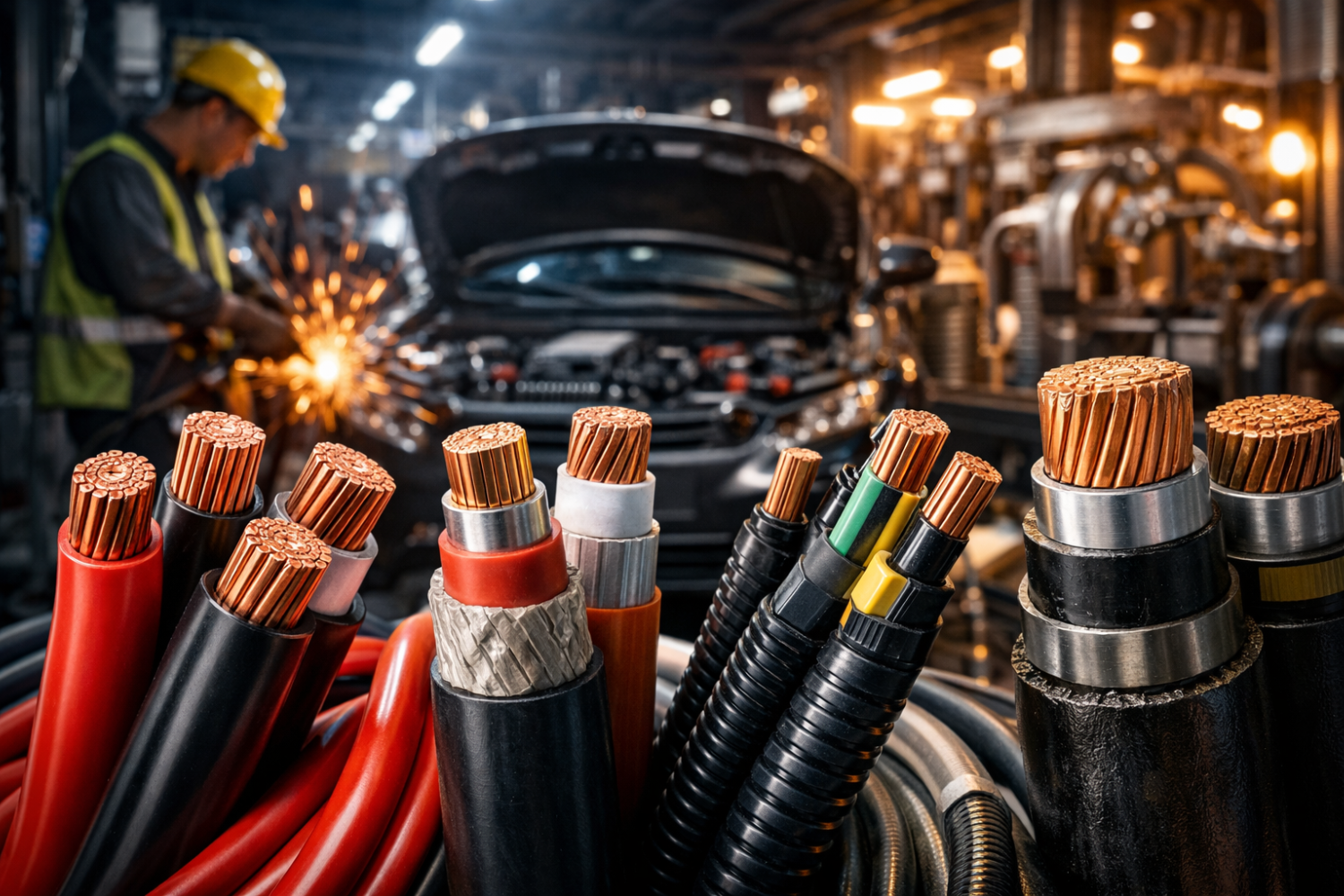
These cables should be able to resist vibration, changes in temperatures and contact with oil, fuels and chemicals. Automotive wiring is normally constructed in flexible copper conductors with protective insulation so that the electrical performance remains constant.
Vehicles are almost entirely dependent on electrical systems to achieve high safety and functionality, therefore, automotive cables of high quality are needed to ensure high reliability and avoid electrical failures.
Heavy Duty Industrial Wiring
Factories, manufacturing units and heavy machinery are connected with industrial wiring. These conditions are usually characterized by electrical loads, rough conditions and 24-hour operation.
The cables used in industries are designed to resist high temperatures, mechanical force and also to withstand exposure to chemicals or moisture. They are normally employed in machines, control systems, automation systems and large electrical installations.
Industrial wiring should be of high standards and specifications in order to be safe and efficient. The correct choice of cables will minimize the downtime, avoid electrical risks, and enhance reliability in the functioning of the industrial environment.
Conclusion
Empire Cables and other companies in this industry deal with electrical wiring and cable solutions to serve different industries that have to depend on sound and safe electrical connection. Their efforts have been added to the wider ecosystem of the distribution of power, automotive and industrial electricity.