
How to Choose the Right Electrical Cable for Your Home in India (Complete 2026 Guide)
Selecting the appropriate electrical cable for your home is no joke. The cable is safe, durable, and delivers good power flow. Voltage variations and the use of heavy appliances are common in India, making the choice of wiring all the more important.
1. Learn about the different Electrical Cables
The type of cables required for various parts of your home will vary. For example:
- Internal connections are made with house wiring cables.
- Flexible cables are ideal for appliances
- Outdoor or underground setups are done with armoured cables.
The difference will assist you not to use the incorrect cable in the incorrect place.
2. Test the Conductor Material.
The conductors of most electrical cables are copper or aluminium. Copper is more commonly used in home wiring as it is a better conductor and it is more durable. It is also efficient in dealing with loads hence safer to use on a daily basis.
3. Check the Cable Size (Gauge).
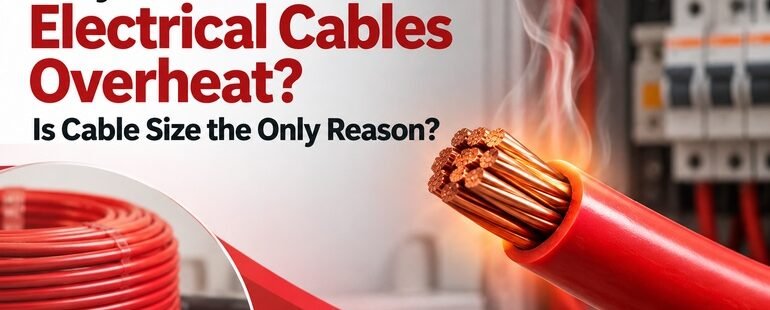
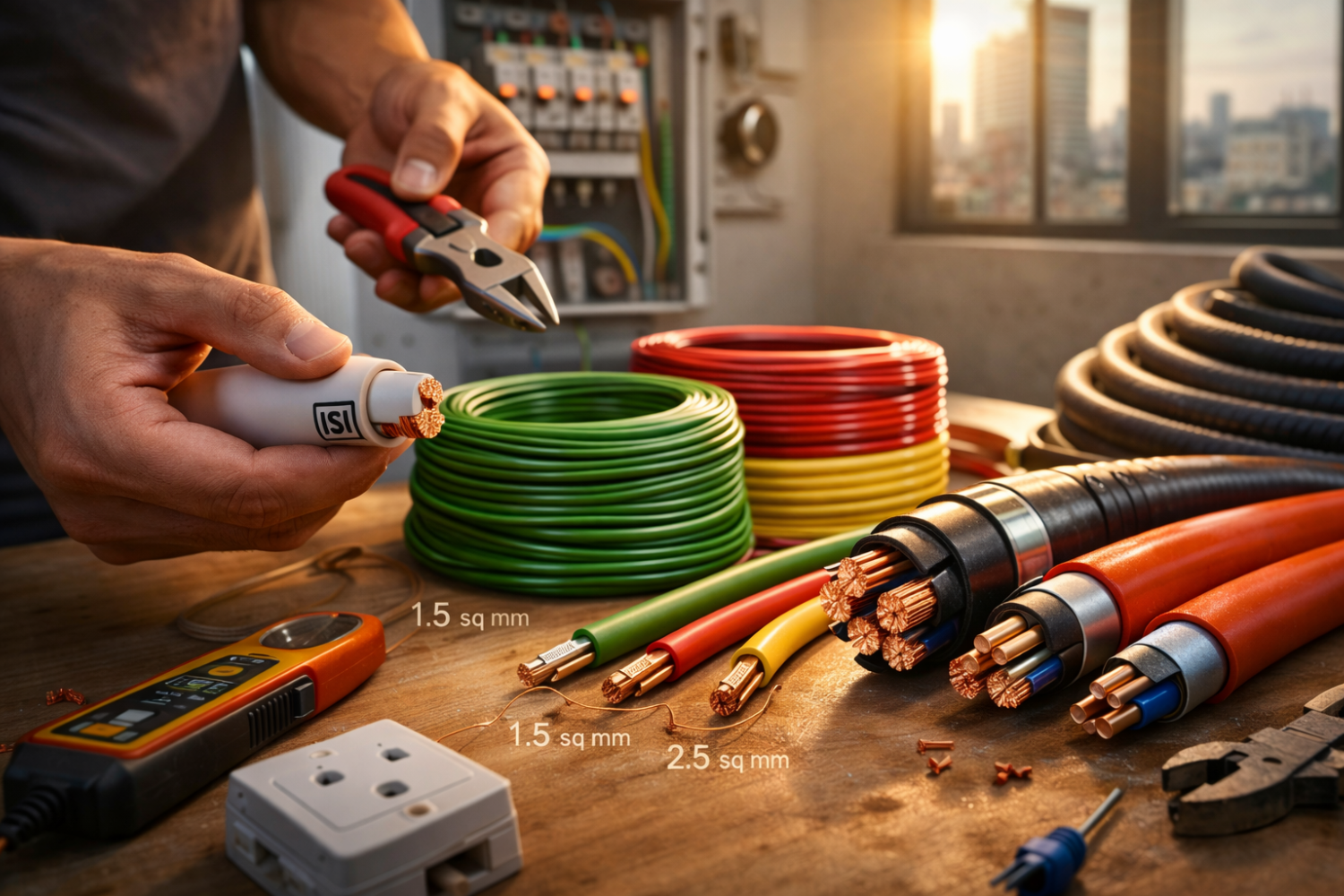
The size of the cable is significant in performance. In case the load is too big to fit in the wire, it can become overheated. The common sizes in the Indian homes are:
- 1.5 sq mm of lighting.
- 2.5 sq mm in case of sockets.
- 4 sq mm or larger in the case of heavy appliances such as ACs.
Always ensure that the cable size is the same as the anticipated electrical load.
4. Pay attention to Insulation Quality.
Good insulation is resistant to shocks, short circuits, and fire. Find PVC insulated or FR (Flame Retardant) cables. Within recent years, there has been a trend of FRLS (Flame Retardant Low Smoke) cables being added to provide added protection, particularly in apartment buildings.
5. Check ISI Certification
In India, always choose cables that have an ISI marking. This guarantees the product to be of the safety standards prescribed by the Bureau of Indian Standards. It is a mere check which can save significant risks.
6. Consider Voltage Rating
Ensure the cable you select is one that can support the voltage needs of your house. The majority of residential cables are designed for 1100 V, which is adequate in Indian homes.
7. Consider Lifespan and Durability.
Electrical wiring is an investment with a long term payback. Enough good quality cables may last 20-30 years. Less expensive solutions might save money in the short run but can cause frequent maintenance and safety issues in the long run.
8. Do Not Disregard Brand Reliability.
As much as technical specifications are important, a trusted manufacturer would also bring about consistency in quality, superior insulation, and proper copper content.
Conclusion
The choice of the appropriate electrical cable is entirely a matter of safety, efficiency and durability. You can make a smart and informed choice with your home by knowing what cable types, sizes, insulations and certifications are.
Empire Cables has a variety of choices that can be used by homeowners to achieve the desired safety levels and the daily power requirements.