

Common Signs Your Home Wiring Needs Immediate Replacement
One of the most crucial components of any residence is electrical wiring, yet it is rarely considered until a critical issue arises. Wiring can malfunction or wear out, causing electric shocks, power outages, and even a house fire. A growing number of residential fires are attributed to electrical defects and overloaded circuits, according to electrical safety reports. Advance knowledge of these signs may help avert costly harm and shield your loved ones.
Regularly Trip Circuit Breakers.
A circuit breaker protects the electrical system. If it trips periodically, it might just be a temporary overload. If the breaker keeps tripping, however, it may be evidence of faulty wiring, circuit overload or an outdated electrical system. If you keep tripping the circuit, it is always important to pay attention to this, as it may indicate a much more serious electrical problem.
Dimmer lights or flickering light
A flickering and dimming light when appliances are turned on may indicate that the wiring in your house is being overloaded. If a few bulbs are flickering, it might be a bad bulb. Still, if most bulbs in the house are flickering, it could indicate faulty wiring connections or insufficient electrical capacity.
Smells of burning near switches or outlets.
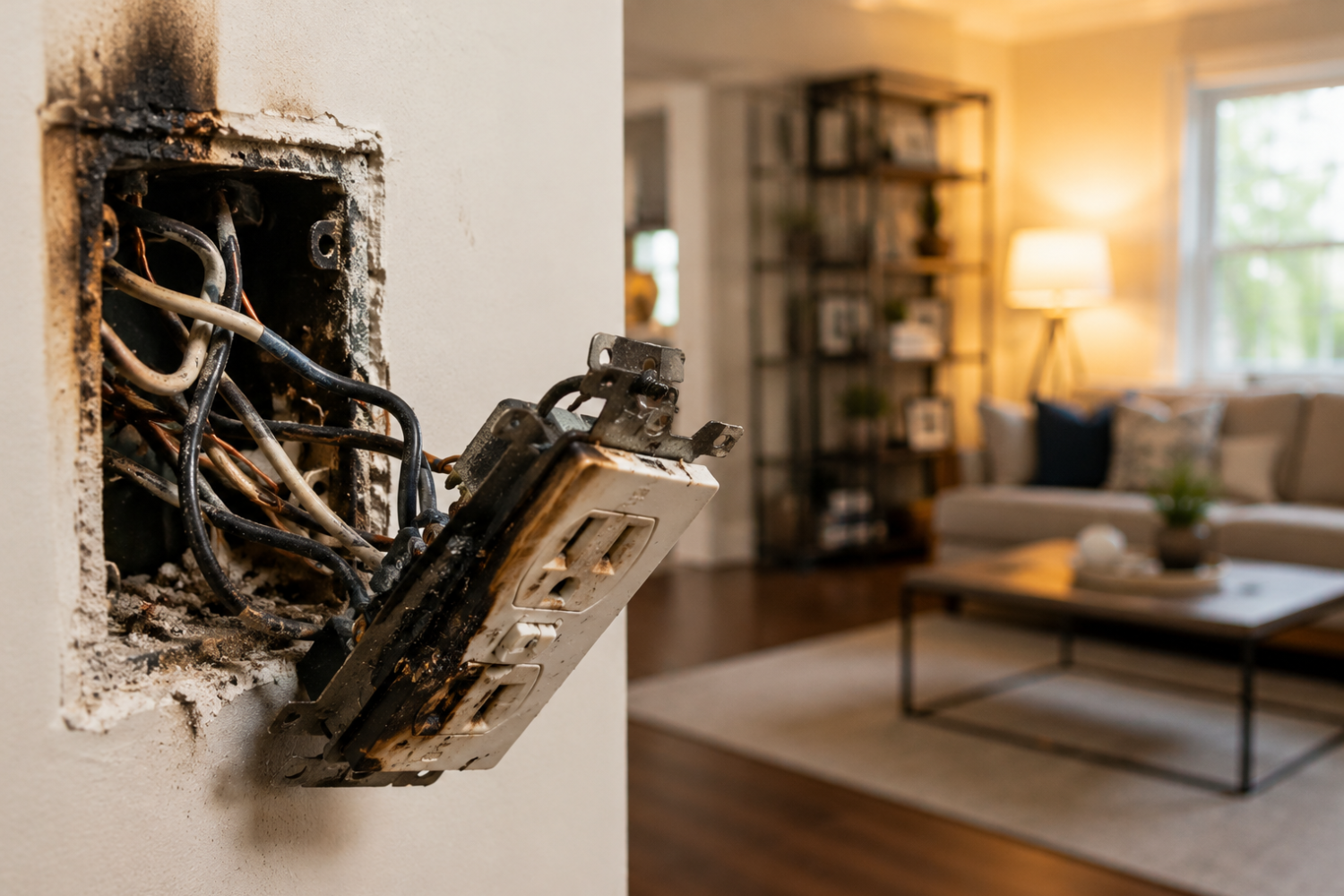
One of the most critical indications is a burning odour from outlets, switches or electrical panels. Burning odours should NOT be caused by electrical wiring. This could be due to overloaded wires, overheating insulation or loose connections. If this odour is found, immediately switch off the power to the affected area and contact a professional for inspection.
Outlets that look dingy or feel warm.
Do not let outlets or switches become hot while operating normally. Discolouration, scorch marks, or excessive heat may indicate that the electrical system is producing too much heat behind the wall. This is frequently caused by broken wiring or loose electrical connections.
Buzzing Sounds from Electrical Fixtures
Electricity should not make noises. Buzzing, crackling, or humming sounds from outlets, switches, or light fixtures could indicate an electrical wiring problem. The sounds can indicate loose connections, damaged wires, or overloaded circuits that require attention.
Outdated Wiring Systems
Older houses can have wiring installations that are not up to date, as they were not built to meet present electrical needs. The number of electronic devices and appliances that today’s households use is much higher than that of homes built several years ago. As wiring ages, the insulation can degrade, and electrical loads can grow, resulting in a potentially dangerous situation.
Conclusion
If unusual behaviour occurs, it is not merely an inconvenience; homeowners should watch. If you experience any of these issues frequently, have flickering lights, warm outlets, burning smells, buzzing noises, or have old wiring, your home wiring needs to be replaced right away. These problems can be avoided and the safety improved if the issues are resolved early on.
Empire Cables emphasises the need for homeowners to be aware of the quality and safety of electrical wiring and ensure that their systems are equipped with reliable components and comply with today’s safety standards.